Close
Login Register
Search
  • About
    • What We Do
    • Who We Are
    • FAQs
  • Our Writing
    • Explainers
    • Essays
    • Letterbox
    • Reports & More
  • Podcasts
  • Our Events
  • Projects
    • Power In The Food Systems
    • Local-Global Scale Project
    • MEAT: The Four Futures Podcast
    • Fuel To Fork
    • Nature
    • Reckoning with Regeneration
    • SHIFT
    • Games at TABLE
    • Rethinking the Global Soy Dilemma
  • Resources
  • Opportunities
    • Jobs
    • Funding
    • Courses
    • Collaborations
    • Events
  • Newsletter
  • TABLE (EN)
Search
Back

Sustainable healthy diets

Image
Photo: Yoshihide Nomura, Fried vegetables, Flickr, Creative Commons License 2.0 generic.
Resource
Efficiency, sufficiency, and consistency for sustainable healthy food
This comment article in The Lancet Planetary Health emphasises that food systems research, addressing sustainability and human health, needs to combine three factors equally to inform comprehensive improvement strategies. 
Read
Image
Photo: Maria Eklind, Crepes at Patisserie David Malmö Sweden, Flickr, Creative Commons License 2.0 generic.
Resource
Is a diet low in greenhouse gas emissions a nutritious diet? – Analyses of self-selected diets in the LifeGene study
This research links the self-reported Food Frequency Questionnaire (FFQ) data of Swedish participants, to Life Cycle Assessment (LCA) data of carbon footprint for food products. The results of this study indicate that a self-selected diet low in diet related greenhouse gas emissions (GHGE) provides comparable intake of nutrients as a diet high in GHGE, and adheres to dietary guidelines for most nutrients.
Read
Image
Resource
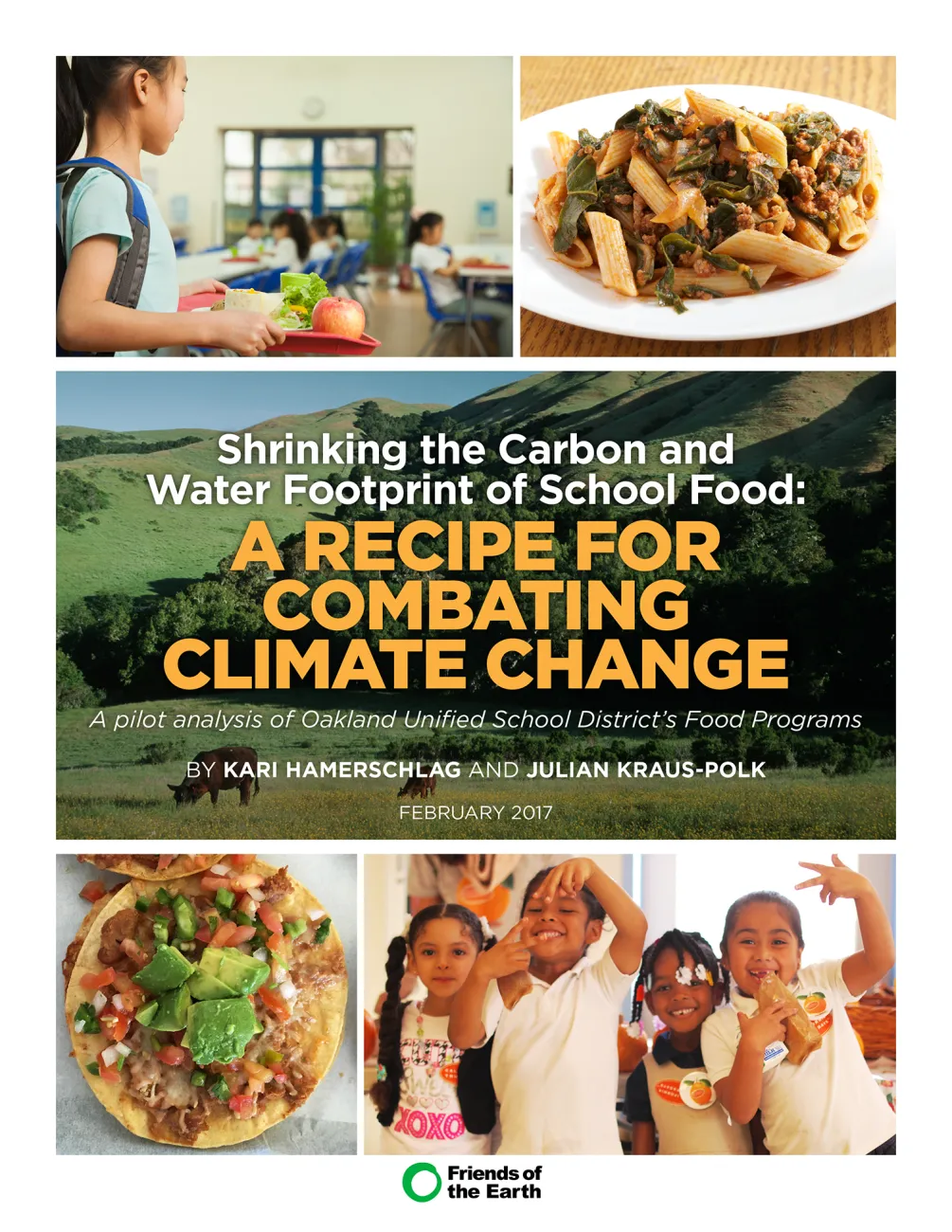
Shrinking the Carbon and Water Footprint of School Food: A Recipe for Combatting Climate Change
Based on a case study from Oakland California, a new report by Friends of the Earth US finds that schools can make lunches healthier and more climate-friendly while also saving money— by reformulating menus so that they are more plant centred, and contain less (and better) meat and fewer dairy products.
Read
Image
Resource
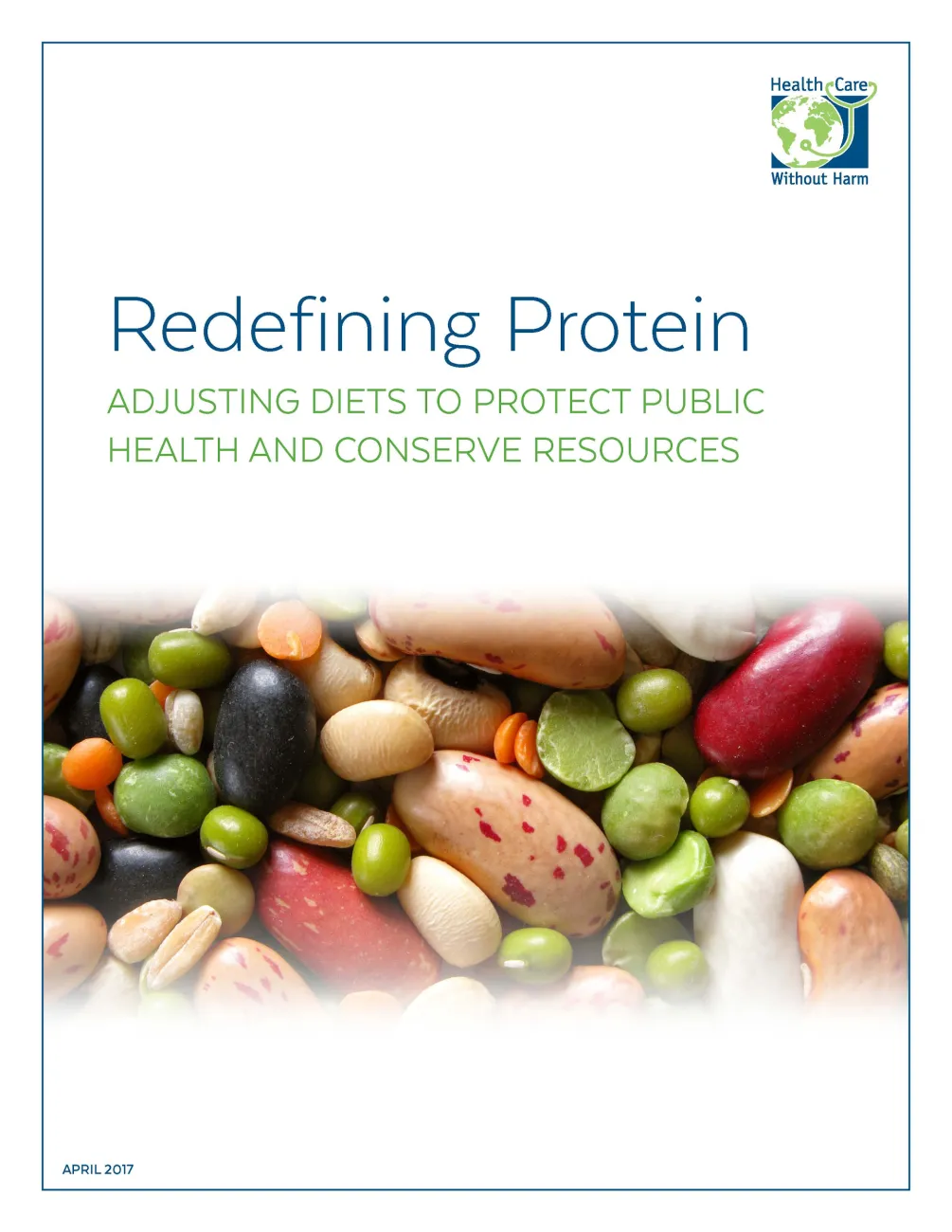
Redefining Protein: Adjusting Diets to Protect Public Health and Conserve Resources
The report Redefining Protein: Adjusting Diets to Protect Public Health and Conserve Resources distils current research looking at the social and environmental impacts of producing high-protein foods other than meat (legumes: pulses and soy, nuts and seeds, eggs and dairy). It aims to provide hospitals with key information to design healthier meals. 
Read
Image
Photo: Camy West, food, Flickr, Creative Commons License 2.0 generic.
Resource
Dietary strategies to reduce environmental impact must be nutritionally complete
In this letter to the editor in Nature, the authors challenge simplified dietary strategies used in lifecycle assessment (LCA) based studies. Citing a paper that presents the LCA of three dietary scenarios for a basket of food products (representative of EU consumption) they argue that “it is irresponsible to present environmentally motivated dietary strategies... that conflict with longstanding public health nutrition objectives.”. 
Read
Image
Photo: ishpikawa ken, school lunch, Root, Flickr, Creative Commons License 2.0 generic.
Resource
Quantifying the carbon footprint of the catering service of public schools
This summary has been provided by FCRN member Alessandro Cerutti from the European Commission Joint Research Centre (JRC). Public administrations such as schools, hospitals and other sectors are well aware of the effort required to manage all the stages of the catering service, from menu selection through to waste management. Several strategies hold potential to reduce the environmental impacts throughout these stages, especially in the context of the Green Public Procurement (GPP). Unfortunately, despite the best of intentions, budget constraints are constantly forcing managers to make difficult trade-offs.
Read
Image
Resource
Sustainable Diets - How Ecological Nutrition Can Transform Consumption and the Food System
This book, by Pamela Mason and Tim Lang, explores what is meant by sustainable diets and why and how this can be made the goal for policymakers as we enter the Anthropocene. We do recommend that you take a look at Tim Lang’s blog-post for the FCRN where he discusses the book’s findings and insights.
Read
Image
Resource
Featured Reports FAO report on ‘Nutrition-sensitive agriculture and food systems in practice: options for intervention’
This report by the FAO aims to equip policymakers in ministries of agriculture and rural development, development partners and others with the tools they need to design nutrition-sensitive food and agriculture policies and programmes.
Read
Image
Photo: Erik Edgren, taro burger, Flickr, Creative Commons License 2.0 generic.
Resource
How Do Dietary Choices Influence the Energy-System Cost of Stabilizing the Climate?
In this paper, using three scenarios for food demand, the researchers model and highlight the indirect relationship between greenhouse gas (GHG) emission abatement within the food supply system and the energy system, globally.
Read
  • VIEW MORE

Sign up for Fodder, our monthly newsletter unpacking the future of food.

Tick below to opt-in to email communications.

You can change your mind at any time by clicking the unsubscribe link in the footer of any email you receive from us, or by contacting us at info@tabledebates.org.

We use Mailchimp as our marketing platform. By clicking below to subscribe, you acknowledge that your information will be transferred to Mailchimp for processing. Learn more about Mailchimp's privacy practices.

  • Glossary
  • About
  • Our Writing
  • Podcasts
  • Resources

Social

YouTube Facebook Instagram

© Copyright 2025

A collaboration between: