Close
Login Register
Search
  • About
    • What We Do
    • Who We Are
    • FAQs
  • Our Writing
    • Explainers
    • Essays
    • Letterbox
    • Reports & More
  • Podcasts
  • Our Events
  • Projects
    • Power In The Food Systems
    • Local-Global Scale Project
    • MEAT: The Four Futures Podcast
    • Fuel To Fork
    • Nature
    • Reckoning with Regeneration
    • SHIFT
    • Rethinking the Global Soy Dilemma
  • Resources
  • Opportunities
    • Jobs
    • Funding
    • Courses
    • Collaborations
    • Events
  • Newsletter
  • TABLE (EN)
Search
Back

Agricultural innovation

Image
Resource
Mainstreaming Nutrition-Agriculture Linkages
Read
Image
Resource
Ecosystem function enhanced by combining four functional types of plant species in intensively managed grassland mixtures: a 3-year continental-scale field experiment.
A paper published in the Journal of Applied Ecology finds that grassland plots planted with a mixture of several agricultural plant species produced a greater yield than plots planted with a single species. The EU-funded study explored whether different combinations and proportions of agricultural plants can lead to higher yields with lower input of fertilisers and more efficient use of land. Intensively managed agricultural grasslands, cultivated to provide food for livestock, have the potential to support, or damage, a range of ecosystem services, depending on how they are managed.
Read
Image
 Flickr: Creative commons licence 2.0, littleyiye "workshop"
Resource
Expert comments on Sustainable Intensification in Agriculture
Following the release last year of the report on ‘Sustainable Intensification in Agriculture’ by the FCRN and the Oxford Martin Programme on the Future of Food, around 30 experts in this field, from academic, governmental, NGO and industrial organisations, were asked to give their comments on the report.
Read
Image
Resource
Adaptation in Agriculture
This paper focuses on how countries can take practical steps to adapt their agriculture to climate change even in the face of considerable uncertainties in the climate models as to how change will play out on the ground for farmers. Amid fears of wasted investments and imprecise science (which themselves become politically motivated excuses for inaction), it shows how countries can adopt a  ‘regret-free’ approach to adapting agriculture to climate change – actions that will benefit farmers and society regardless of specifically how and when climate change plays out on the ground. The paper notes that this very uncertainty often becomes an excuse for inaction.
Read
Resource
Food, scarcity and abundance
Louise Fresco provides an overview of historical and future food security trends in her speech at the 200th commemorative meeting of the Royal Swedish Academy of Agriculture and Forestry entitled Food, scarcity and abundance.
Read
Image
Resource
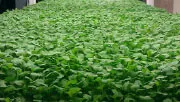
Vertical farming: World's largest indoor vertical farm opens
A new 90,000-square-foot indoor farm called FarmedHere has recently opened in Chicago and is expected to produce 1 million pounds a year of organic greens like basil, lettuce, mint, and spinach. It is also expected that it will provide hundreds of local jobs. 
Read
Image
Resource
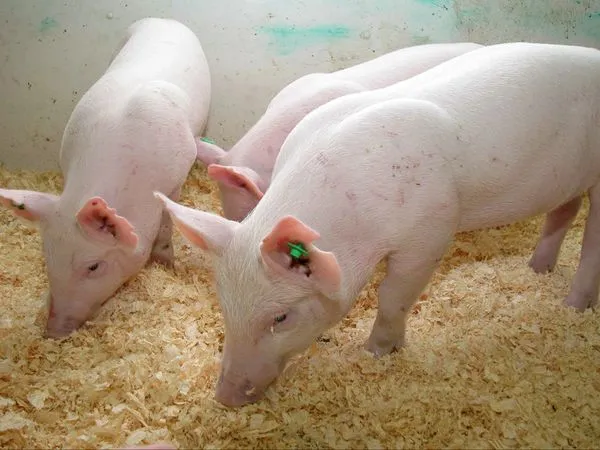
Paper: Phosphorous efficient Enviropig
Science Daily summarises the findings of a paper which reports on recent successful attempts to transgenically breed a pig that utilises  phosphorous more efficiently.  The pigs have genetically modified salivary glands, which help them digest phosphorus in feedstuffs, thereby reducing phosphorus pollution in the environment.
Read
Resource
British Biochar Foundation website
The British Biochar Foundation is inviting people to sign up to its website. Details as follows. Our aim is to provide a place for developers, producers, enthusiasts and anyone else who is interested, to come together to share knowledge, experience, ideas and contacts and to act as a platform and catalyst for the emerging biochar industry.
Read
Resource
Yield Enhancement Network launched
ADAS, an environmental consultancy firm, has launched a Yield Enhancement Network (YEN) set up to foster and energise innovation in the arable industry, with the goal of understanding how  higher yields from the UK’s arable sector can be produced. 
Read
  • VIEW MORE

Sign up for Fodder, our newsletter covering sustainable food news.

Sign up
  • Glossary
  • About
  • Our Writing
  • Podcasts
  • Resources

Social

YouTube Facebook Instagram

© Copyright 2025

A collaboration between: