Close
Login Register
Search
  • About
    • What We Do
    • Who We Are
    • FAQs
  • Our Writing
    • Explainers
    • Essays
    • Letterbox
    • Reports & More
  • Podcasts
  • Our Events
  • Projects
    • Power In The Food Systems
    • Local-Global Scale Project
    • MEAT: The Four Futures Podcast
    • Fuel To Fork
    • Nature
    • Reckoning with Regeneration
    • SHIFT
    • Games at TABLE
    • Rethinking the Global Soy Dilemma
  • Resources
  • Opportunities
    • Jobs
    • Funding
    • Courses
    • Collaborations
    • Events
  • Newsletter
  • TABLE (EN)
Search
Back

TABLE

Resource
Danish government scraps fat tax
The Danish government has officially ended its tax on saturated fat just a year after it was introduced, and has cancelled a proposed sugar tax.
Read
Resource
NHF report: What is the role of health related food duties?
New duties on foods known to be unhealthy should be part of a package of public health policies to tackle overweight and obesity and other diet-related diseases, according to the National Heart Forum (NHF).
Read
Resource
Book: The Politics of Land and Food Scarcity
The Politics of Land and Food Scarcity, by Paolo De Castro, Felice Adinolfi, Fabian Capitanio, Salvatore Di Falco, and Angelo Di Mambro, provides an overview of the new global challenges connected with land, food supply, and agriculture. 
Read
Resource
PricewaterhouseCooper Report: current government ambitions won’t stop temperature rise
PricewaterhouseCoopers (PwC) has released a report entitled the Low Carbon Economy Index, which analyses the amount of carbon emitted per unit of GDP. It concludes that for a 50 % chance of limiting temperature rise to 2˚C, carbon intensity needs to fall by more than 5 % per year every year until 2050. 
Read
Resource
Livestock greenhouse gas emissions and mitigation potential in Europe
This article, published in Global Change Biology, examines the total greenhouse gas (GHG) emissions for the EU27 livestock sector for the year 2007 utilizing a life cycle assessment, which examines every step and input during the creation of a product to calculate total GHG emissions. They also examined the GHG emissions from livestock production, consumption of imported livestock products and wastage.
Read
Resource
Enhanced top soil carbon stocks under organic farming (FCRN member article)
FCRN member Dr. Adrian Muller co-authored a meta-analysis published in the journal Proceedings of the National Academy of Sciences of the United States of America (PNAS). The authors looked at datasets from 74 studies from pairwise comparisons of organic vs. nonorganic farming systems to identify differences in soil organic carbon (SOC). 
Read
Resource
UK: Statement on sustainable palm oil
The UK’s Department for Environment, Food & Rural Affairs (Defra) recently released a statement saying that by the end of 2015 all palm oil used in central Government food and catering services will come from environmentally friendly sources. However, Defra’s statement has come under fire from groups such as WWF-UK and the British Retail Consortium (BRC), who say the agreement is too weak and requires participation by other sectors to have a substantial impact.
Read
Image
Resource
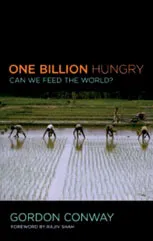
New Book: One Billion Hungry: Can We Feed the World?
In One Billion Hungry: Can We Feed The World?, Gordon Conway explains the many interrelated issues critical to our global food supply from the science of agricultural advances to the politics of food security. He emphasises the essential combination of increased food production, environmental stability, and poverty reduction necessary to end endemic hunger on our planet.
Read
Image
Resource
Journal Article: Increased greenhouse-gas intensity of rice production under future atmospheric conditions
A paper in Nature Climate Change finds that more carbon dioxide in the atmosphere and rising temperatures cause rice agriculture to release more of the potent greenhouse gas methane (CH4) for each kilogram of rice it produces.
Read
  • VIEW MORE

Sign up for Fodder, our monthly newsletter unpacking the future of food.

Tick below to opt-in to email communications.

You can change your mind at any time by clicking the unsubscribe link in the footer of any email you receive from us, or by contacting us at info@tabledebates.org.

We use Mailchimp as our marketing platform. By clicking below to subscribe, you acknowledge that your information will be transferred to Mailchimp for processing. Learn more about Mailchimp's privacy practices.
  • Glossary
  • About
  • Our Writing
  • Podcasts
  • Resources

Social

YouTube Facebook Instagram

© Copyright 2025

A collaboration between: