Close
Login Register
Search
  • About
    • What We Do
    • Who We Are
    • FAQs
  • Our Writing
    • Explainers
    • Essays
    • Letterbox
    • Reports & More
  • Podcasts
  • Our Events
  • Projects
    • Power In The Food Systems
    • Local-Global Scale Project
    • MEAT: The Four Futures Podcast
    • Fuel To Fork
    • Nature
    • Reckoning with Regeneration
    • SHIFT
    • Games at TABLE
    • Rethinking the Global Soy Dilemma
  • Resources
  • Opportunities
    • Jobs
    • Funding
    • Courses
    • Collaborations
    • Events
  • Newsletter
  • TABLE (EN)
Search
Back

TABLE

Image
Resource
Food Systems and Natural Resources. A Report of the Working Group on Food Systems of the International Resource Panel
This report, Food Systems and Natural Resources”developed by the International Resource Panel (IRP) looks at the use and management of natural resources that go into the food system, the consequences of that management and the options to improve the efficiency with which they are managed. 
Read
Image
Resource
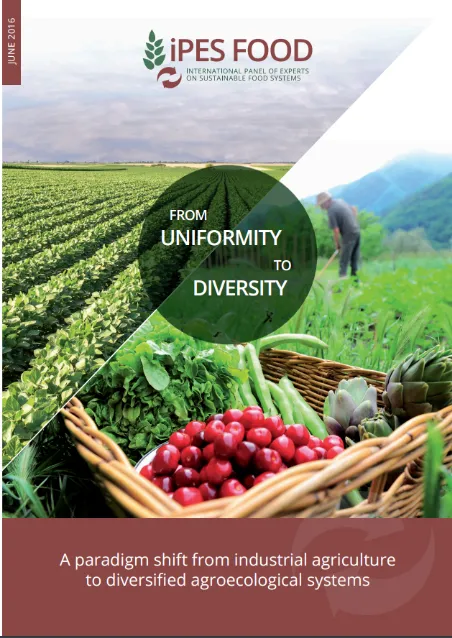
IPES report “From uniformity to diversity: a paradigm shift from industrial agriculture to diversified agroecological systems”
The iPES food panel (International Panel of Experts on Sustainable Food Systems), has published a report reviewing the latest evidence on benefits and challenges with different production models, specifically looking at the industrial agriculture and agroecological farming systems. It argues that there are eight key reasons why industrial agriculture is locked in place despite its negative impacts; and it maps out a series of steps to break these cycles and shift towards expanding agroecological farming.
Read
Image
Resource
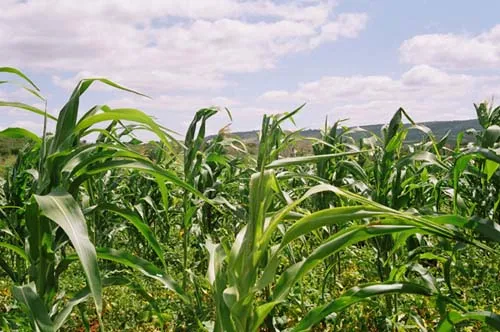
The phosphorus cost of agricultural intensification in the tropics
This paper published in Nature Plants finds that if tropical farming intensifies, major additions of phosphorus to soils will be needed
Read
Image
Photo: Natural resources conservation service (Flickr, creative commons 2.0)
Resource
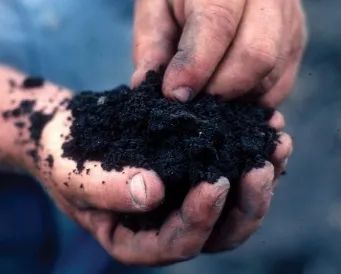
'Climate-smart soils' may help balance the carbon budget
This paper looks at how soil can help contribute to climate mitigation.  It argues that by decreasing greenhouse gas emissions, sequestering carbon and using prudent agricultural management practices that improve the soil-nitrogen cycle (tighter cycle with less leakage), it is possible to enhance soil fertility, bolster crop productivity, improve soil biodiversity, and reduce erosion, runoff and water pollution.
Read
Image
(Photo credit: Food Science and Nutrition journal)
Resource
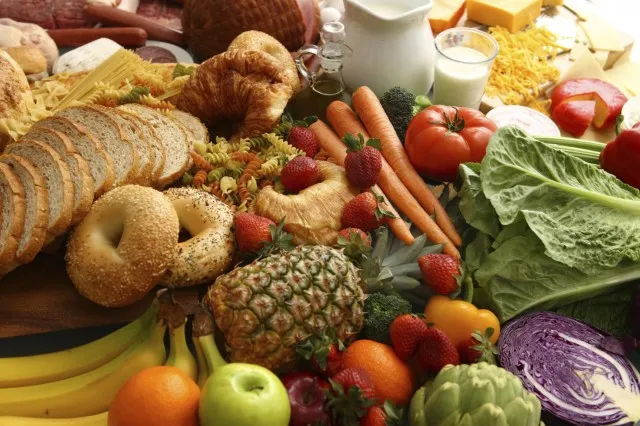
Food surplus and its climate burdens
This article discusses the interplay of food requirements, food waste, food deficits, and associated GHG emissions. It estimates the agricultural GHG emissions associated with food waste, argues the importance of reducing food waste as a contribution to addressing GHG emissions and proposes a standardized method for estimating food waste for all countries.
Read
Image
Photo credit: (Flickr: crustmania, creative commons 2.0)
Resource
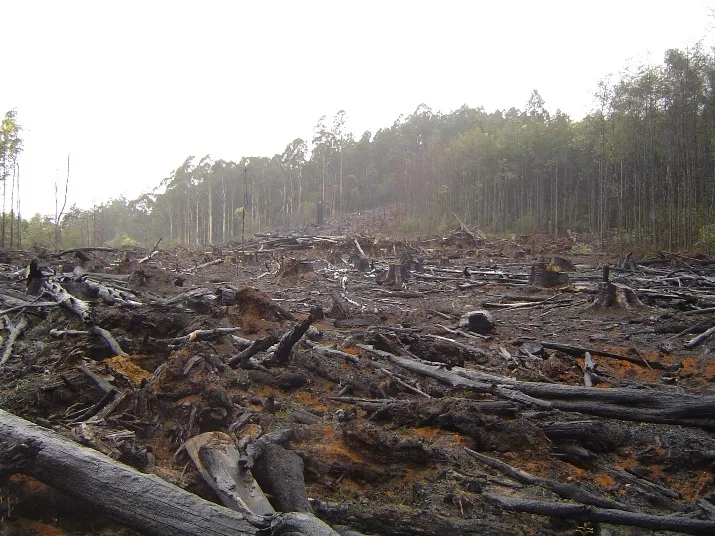
Feeding the world without deforestation - the biophysical option
Taking as their starting point a hypothetical zero-deforestation for agricultural production, where people would refrain from clearing any further forests for agricultural purposes, the researchers behind this study look at both supply side and demand side measures to assess how changes in production and diet can assist in halting deforestation
Read
Image
Photo credit: USDA (Flickr, creative commons licence 2.0).
Resource
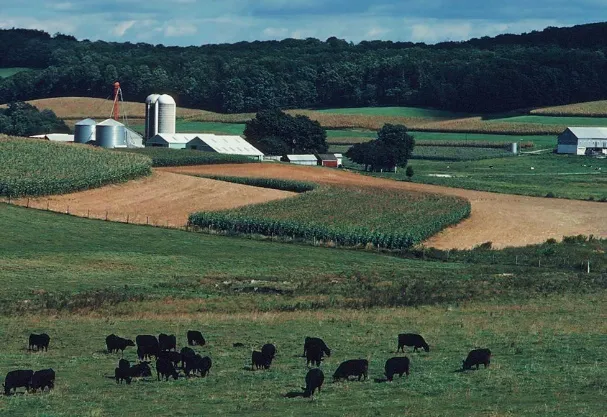
Global challenges require cross-cutting solutions: bringing together water, energy, and food policy
This paper discusses the water-energy-food nexus from a UK perspective with a focus on competing land demands.  The research, led by the Tyndall Centre for Climate Change Research, suggests that current UK policies on water, energy and food are too fragmented to effectively tackle global challenges. The paper argues that there is a need for cross-sectoral policies and for new research to focus on the nexus between sectors, scales and timeframes to address this challenge.
Read
Image
Resource
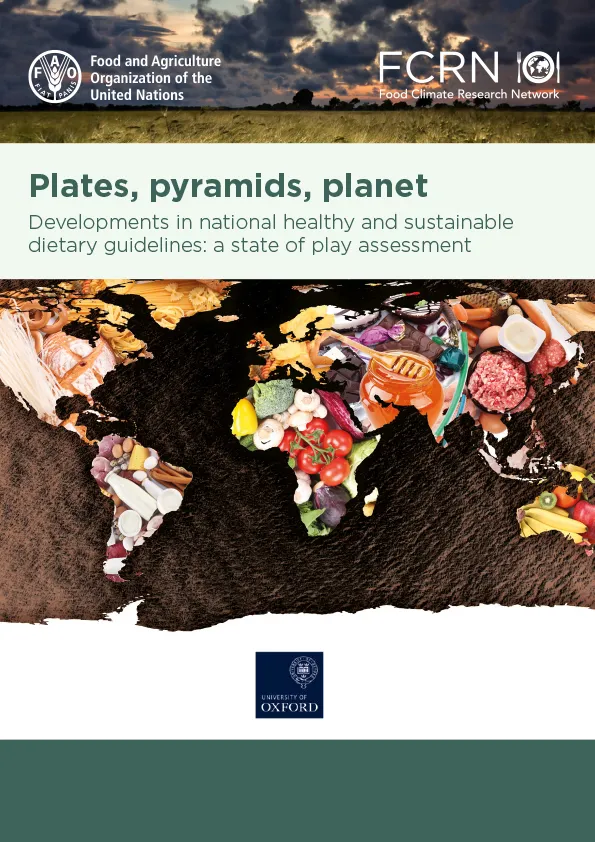
Plates, pyramids and planet – Developments in national healthy and sustainable dietary guidelines: a state of play assessment
Today sees the launch of a new report published jointly by the Food and Agriculture Organisation (FAO) and the Food Climate Research Network (FCRN) at the University of Oxford. Plates, pyramids and planet evaluates government-issued food-based dietary guidelines from across the globe, looking in particular at whether they make links to environmental sustainability as well as personal health. 
Read
Image
Resource
World Resources Report: Shifting diets for a sustainable food future
Read
  • VIEW MORE

Sign up for Fodder, our monthly newsletter unpacking the future of food.

Tick below to opt-in to email communications.

You can change your mind at any time by clicking the unsubscribe link in the footer of any email you receive from us, or by contacting us at info@tabledebates.org.

We use Mailchimp as our marketing platform. By clicking below to subscribe, you acknowledge that your information will be transferred to Mailchimp for processing. Learn more about Mailchimp's privacy practices.
  • Glossary
  • About
  • Our Writing
  • Podcasts
  • Resources

Social

YouTube Facebook Instagram

© Copyright 2025

A collaboration between: