Close
Login Register
Search
  • About
    • What We Do
    • Who We Are
    • FAQs
  • Our Writing
    • Explainers
    • Essays
    • Letterbox
    • Reports & More
  • Podcasts
  • Our Events
  • Projects
    • Power In The Food Systems
    • Local-Global Scale Project
    • MEAT: The Four Futures Podcast
    • Fuel To Fork
    • Nature
    • Reckoning with Regeneration
    • SHIFT
    • Games at TABLE
    • Rethinking the Global Soy Dilemma
  • Resources
  • Opportunities
    • Jobs
    • Funding
    • Courses
    • Collaborations
    • Events
  • Newsletter
  • TABLE (EN)
Search
Back

TABLE

Image
Photo: Flickr, 16:9 Clue, Creative Commons License 2.0
Resource
Improved omega-3 content of animal foods possible without increasing environmental impact
Various health agencies recommend dietary intake of the two fatty acids omega-3 Eicosapentaenoic Acid (EPA) and Docosahexaenoic Acid (DHA) at a level between 250 and 500 mg/day.
Read
Image
Resource
Changing the food system to provide sustainable healthy diets
In this Perspective article in the journal Science, the FCRN’s Tara Garnett articulates the need for a strong policy focus on sustainable healthy diets, and assesses the current state of research and understanding on the relationship between health and sustainability. 
Read
Image
Resource
Good Practice Report on Sustainable Public Procurement of School Catering Services
This report from INNOCAT, a project set up to help encourage eco-innovation in the catering sector, showcases best practices from a group of cities working on procurement of food and catering services.  The report takes a close look at school catering since this represents a significant share of the procurement budget of many local governments.
Read
Image
Photo: KeWynn Lee, Before, Flickr, Creative Commons License 2.0
Resource
Re-framing the climate change debate in the livestock sector: mitigation and adaptation options
This review article provides a summary of the multiple environmental and societal costs and benefits of livestock production. Homing in on climate change, it reviews the range of GHG mitigation options that have been proposed both on the supply side (actions that potentially reduce emissions per unit of production, or absolute emissions, considering both changes in practice and in policy) and those on the demand side (e.g. reductions in meat consumption, waste reduction).
Read
Resource
Beyond calorie counting: assessing the sustainability of food provided for public consumption
This paper presents a food sustainability assessment tool called FOODSCALE which contributes to the scientific evidence on the social, economic and environmental impacts of food provision in large-scale organizations, facilitating analysis and potentially subsequent action.
Read
Image
Photo: Holistic Management, Mob grazing, Flickr, Creative Commons License 2.0
Resource
Can ruminants reduce rather than increase agriculture’s carbon footprint in North America?
As methane produced by ruminants is a potent greenhouse gas (GHG), many researchers and organisations have pointed to the necessity of reducing ruminant stocks around the world. In this study, the authors argue that with the right crop and grazing management, ruminants might not only reduce overall GHG emissions, but could, in fact, facilitate increases in soil carbon, and reduce environmental damage related to current cropping practices.
Read
Image
Photo: jai Mansson, Flickr, Creative Commons License 2.0
Resource
Debate on beef production intensification and land sparing vs. land sharing in the Amazon
This letter in Global Change Biology responds to a paper published earlier in the year in Nature Climate Change by de Silva et al (summarised by the FCRN here) which concludes that a combination of strict land controls and an increase in beef production in the Amazon could lead to greater emissions reduction than a scenario of land control and no beef production increases.
Read
Image
Photo: Rod Waddington, After the Rainforest Uganda, Flickr, Creative Commons License 2.0
Resource
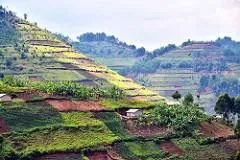
Biodiversity protection and carbon storage demands to change global patterns of land use in the future
In this paper, land change scenarios are modelled that include biodiversity protection or afforestation for carbon sequestration as an explicit demand which competes with demand for food and feed production.
Read
Image
Photo: Rubén Moreno Montolíu, Earth, Flickr, Creative Commons License 2.0
Resource
From Planetary Boundaries to national fair shares of the global safe operating space — How can the scales be bridged?
The authors of this paper have tried to develop a framework to apply the concept of planetary boundaries to national level decision making and to discuss what a country’s ‘fair share’ of Earth’s safe operating space could be.
Read
  • VIEW MORE

Sign up for Fodder, our monthly newsletter unpacking the future of food.

Tick below to opt-in to email communications.

You can change your mind at any time by clicking the unsubscribe link in the footer of any email you receive from us, or by contacting us at info@tabledebates.org.

We use Mailchimp as our marketing platform. By clicking below to subscribe, you acknowledge that your information will be transferred to Mailchimp for processing. Learn more about Mailchimp's privacy practices.
  • Glossary
  • About
  • Our Writing
  • Podcasts
  • Resources

Social

YouTube Facebook Instagram

© Copyright 2025

A collaboration between: