Image Resources Our extensive research library contains thousands of summaries of journal articles, reports and news stories that can be searched by keyword and category RESOURCES CATEGORYBooksBriefing paperEvent recordingFeatured articlesFeatured reportGameJournal articlesNews and resourcesReportsThink pieceVideoWorking paperWorkshop summary YEAR201220132014201520162017201820192020202120222023202420252026 Image Resource A Special GreenFacts Newsletter: Keys Facts on climate, climate change, its consequences and energy management challenges Read Image Resource Sustainable Investment and Finance Going Mainstream This article in Environment Magazine (MIT press) discusses so called “ESG” investments - environmental, social, and governance investment criteria. The article charts the history of socially and environmentally responsible investments and argues that screening of assets with environmental, social, or governance parameters in mind is growing. Read Image Resource WHO to follow up study on meat consumption and cancer risk On 30th October 2015 the FCRN highlighted a study by the World Health Organisation which concludes that processed meats cause cancer and classed red meat as “probable” cause. Read Image Resource Report finds that human-caused climate change increased the severity of many extreme events in 2014 This report entitled “Explaining Extreme Events of 2013 from a Climate Perspective” is the fourth in a series of annual reports published by the US National Oceanic and Atmospheric Administration. It provides an assessment of how climate change may have affected the strength and likelihood of individual extreme events. Read Image Resource World Bank report states climate change could push 100 million people back into poverty by 2030 This report by the World Bank highlights the acute threat of climate change to poor people that result from the impacts on food security. The key message is that efforts to curb climate change must be twinned with programmes to cut poverty, if we are to keep climate change from pushing more than 100 million people back into poverty in just 15 years (by 2030). Read Image Resource The Case for Protein Diversity - Accelerating the adoption of more sustainable eating patterns in the UK This white paper, produced by the independent sustainability company The Carbon Trust and sponsored by Quorn Foods, argues that greater diversity of main ingredients would be better for Britain both from a health and climate perspective. Increasing the diversity of UK protein choices is described as a practical way to promote more sustainable diets with lower impacts on health and environment. Read Image Resource Reducing Food Loss And Waste While Improving The Public’s Health This paper presents an overview of policies and interventions aimed at addressing food loss and waste. It argues that to curtail food waste in higher income countries, measures such as clarifying food date labels could go a long way. Consumers are often confused by "use by," "best by" and "sell by" dates on food packaging and throw out perfectly edible food. Improving date labelling policy can also improve food safety. Read Image Resource A Food Systems Approach To Healthy Food And Agriculture Policy In this paper researchers recommend taking a broader "systems" approach to food policy in order to tackle public health issues as far-ranging as climate change and antibiotic use in food animal production. Three examples are given of a food systems approach to food policy: farm-to-school programs, incorporating sustainability into the Dietary Guidelines for Americans and antibiotic use in food animal production. Read Image Resource Three-point plan to ensure the world's protected areas meet new biodiversity targets This paper argues that the failure of protected areas to guard biodiversity partly reflects a lack of science available. The paper offers strategic guidance on the types of science needed to be conducted so protected areas can be placed and managed in ways that support the overall goal to avert biodiversity loss. Read VIEW MORE
Image Resource A Special GreenFacts Newsletter: Keys Facts on climate, climate change, its consequences and energy management challenges Read
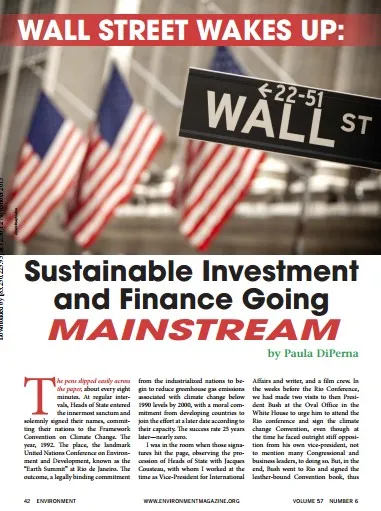
Image Resource Sustainable Investment and Finance Going Mainstream This article in Environment Magazine (MIT press) discusses so called “ESG” investments - environmental, social, and governance investment criteria. The article charts the history of socially and environmentally responsible investments and argues that screening of assets with environmental, social, or governance parameters in mind is growing. Read
Image Resource WHO to follow up study on meat consumption and cancer risk On 30th October 2015 the FCRN highlighted a study by the World Health Organisation which concludes that processed meats cause cancer and classed red meat as “probable” cause. Read
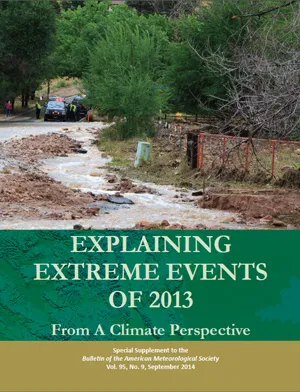
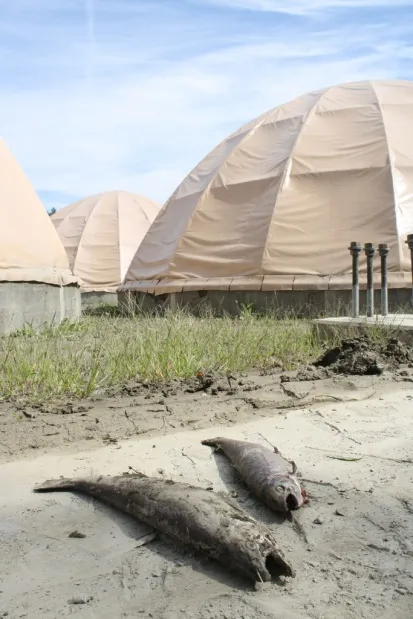
Image Resource Report finds that human-caused climate change increased the severity of many extreme events in 2014 This report entitled “Explaining Extreme Events of 2013 from a Climate Perspective” is the fourth in a series of annual reports published by the US National Oceanic and Atmospheric Administration. It provides an assessment of how climate change may have affected the strength and likelihood of individual extreme events. Read
Image Resource World Bank report states climate change could push 100 million people back into poverty by 2030 This report by the World Bank highlights the acute threat of climate change to poor people that result from the impacts on food security. The key message is that efforts to curb climate change must be twinned with programmes to cut poverty, if we are to keep climate change from pushing more than 100 million people back into poverty in just 15 years (by 2030). Read
Image Resource The Case for Protein Diversity - Accelerating the adoption of more sustainable eating patterns in the UK This white paper, produced by the independent sustainability company The Carbon Trust and sponsored by Quorn Foods, argues that greater diversity of main ingredients would be better for Britain both from a health and climate perspective. Increasing the diversity of UK protein choices is described as a practical way to promote more sustainable diets with lower impacts on health and environment. Read
Image Resource Reducing Food Loss And Waste While Improving The Public’s Health This paper presents an overview of policies and interventions aimed at addressing food loss and waste. It argues that to curtail food waste in higher income countries, measures such as clarifying food date labels could go a long way. Consumers are often confused by "use by," "best by" and "sell by" dates on food packaging and throw out perfectly edible food. Improving date labelling policy can also improve food safety. Read
Image Resource A Food Systems Approach To Healthy Food And Agriculture Policy In this paper researchers recommend taking a broader "systems" approach to food policy in order to tackle public health issues as far-ranging as climate change and antibiotic use in food animal production. Three examples are given of a food systems approach to food policy: farm-to-school programs, incorporating sustainability into the Dietary Guidelines for Americans and antibiotic use in food animal production. Read
Image Resource Three-point plan to ensure the world's protected areas meet new biodiversity targets This paper argues that the failure of protected areas to guard biodiversity partly reflects a lack of science available. The paper offers strategic guidance on the types of science needed to be conducted so protected areas can be placed and managed in ways that support the overall goal to avert biodiversity loss. Read