Image Resources Our extensive research library contains thousands of summaries of journal articles, reports and news stories that can be searched by keyword and category RESOURCES CATEGORYBooksBriefing paperEvent recordingFeatured articlesFeatured reportGameJournal articlesNews and resourcesReportsThink pieceVideoWorking paperWorkshop summary YEAR201220132014201520162017201820192020202120222023202420252026 Image Resource Biological Economies: Experimentation and the politics of agri-food frontiers Recent agri-food studies, including commodity systems, the political economy of agriculture, regional development, and wider examinations of the rural dimension in economic geography and rural sociology have been confronted by three challenges. Read Image Resource Horticulture in the UK: potential for meeting dietary guideline demands – new report by Food Research Collaboration (FRC) This report produced by Food Research Collaboration (FRC) outlines the horticulture sector’s potential to create a shift towards healthier diets in the UK by contributing to overall fruit and vegetable consumption. Read Image Resource Report: 'Mitigating risks and vulnerabilities in the energy-food-water nexus in developing countries' This report entitled 'Mitigating risks and vulnerabilities in the energy-food-water nexus in developing countries' analyses global nexus interconnections (such as the dependence of food systems on energy at every stage of the food value chain) and identifies key challenges for food, energy and water security, which include economic and population growth, resource depletion, environmental degradation, climate change and globalisation. Read Image Resource Environmental implications of Swedish food consumption and dietary choices Researchers at the Swedish Environmental Research Institute have investigated how different food choices and changing eating habits affect the environment. Read Image Resource Stepping stones towards sustainable agriculture in China This report written by Andreas Wilkes and Lanying Zhang for the International Institute for Environment and development (IIED) provides an overview of issues in sustainable agriculture in China, the country’s evolution to a modern, high-external input agriculture and the sustainability implications of this development. The report also looks into issues such as land tenure reforms and roles of cooperatives. Read Image Resource Can urban gardeners benefit ecosystems while keeping food traditions alive? This study looks into how residential landscapes in Chicago, USA, which constitute the largest single urban land use, benefit ecosystems. It argues that even though we often don’t associate modern urban areas with healthy ecosystems, home gardens in urban landscapes can contribute to important ecosystem services. Read Image Resource The 2015 Dutch food-based dietary guidelines The Health Council of the Netherlands (the Dutch Dietary Guidelines Committee 2015) has published an updated set of Dutch dietary guidelines. Read Image Resource International inequality of environmental pressures: Decomposition and comparative analysis In this paper, researchers from a number of European and Australian research institutions seek to (1) identify global inequalities in the distribution of environmental pressures, and (2) determine the relative importance of the drivers behind these inequalities. Read Image Resource Effects of conservation policy on China’s forest recovery This paper looks at China’s National Forest Conservation Program (NFCP) and concludes that overall, it has been successful in reforesting the country. Prior to this study, scientists did not have proof of China’s claims of forest growth and the effectiveness of the program and China has been under international pressure to scientifically report their findings. Read VIEW MORE
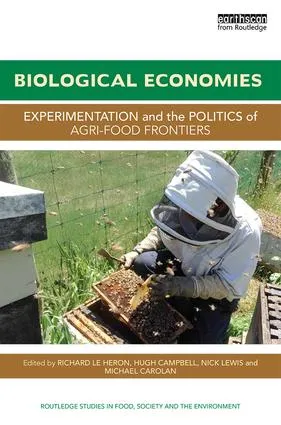
Image Resource Biological Economies: Experimentation and the politics of agri-food frontiers Recent agri-food studies, including commodity systems, the political economy of agriculture, regional development, and wider examinations of the rural dimension in economic geography and rural sociology have been confronted by three challenges. Read
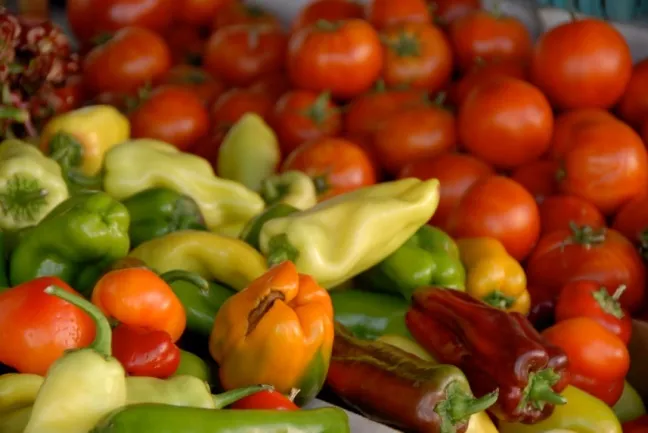
Image Resource Horticulture in the UK: potential for meeting dietary guideline demands – new report by Food Research Collaboration (FRC) This report produced by Food Research Collaboration (FRC) outlines the horticulture sector’s potential to create a shift towards healthier diets in the UK by contributing to overall fruit and vegetable consumption. Read
Image Resource Report: 'Mitigating risks and vulnerabilities in the energy-food-water nexus in developing countries' This report entitled 'Mitigating risks and vulnerabilities in the energy-food-water nexus in developing countries' analyses global nexus interconnections (such as the dependence of food systems on energy at every stage of the food value chain) and identifies key challenges for food, energy and water security, which include economic and population growth, resource depletion, environmental degradation, climate change and globalisation. Read
Image Resource Environmental implications of Swedish food consumption and dietary choices Researchers at the Swedish Environmental Research Institute have investigated how different food choices and changing eating habits affect the environment. Read
Image Resource Stepping stones towards sustainable agriculture in China This report written by Andreas Wilkes and Lanying Zhang for the International Institute for Environment and development (IIED) provides an overview of issues in sustainable agriculture in China, the country’s evolution to a modern, high-external input agriculture and the sustainability implications of this development. The report also looks into issues such as land tenure reforms and roles of cooperatives. Read
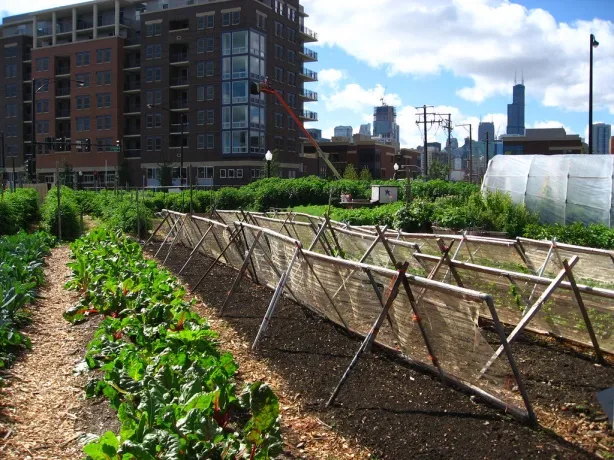
Image Resource Can urban gardeners benefit ecosystems while keeping food traditions alive? This study looks into how residential landscapes in Chicago, USA, which constitute the largest single urban land use, benefit ecosystems. It argues that even though we often don’t associate modern urban areas with healthy ecosystems, home gardens in urban landscapes can contribute to important ecosystem services. Read
Image Resource The 2015 Dutch food-based dietary guidelines The Health Council of the Netherlands (the Dutch Dietary Guidelines Committee 2015) has published an updated set of Dutch dietary guidelines. Read
Image Resource International inequality of environmental pressures: Decomposition and comparative analysis In this paper, researchers from a number of European and Australian research institutions seek to (1) identify global inequalities in the distribution of environmental pressures, and (2) determine the relative importance of the drivers behind these inequalities. Read
Image Resource Effects of conservation policy on China’s forest recovery This paper looks at China’s National Forest Conservation Program (NFCP) and concludes that overall, it has been successful in reforesting the country. Prior to this study, scientists did not have proof of China’s claims of forest growth and the effectiveness of the program and China has been under international pressure to scientifically report their findings. Read