Image Resources Our extensive research library contains thousands of summaries of journal articles, reports and news stories that can be searched by keyword and category RESOURCES CATEGORYBooksBriefing paperEvent recordingFeatured articlesFeatured reportGameJournal articlesNews and resourcesReportsThink pieceVideoWorking paperWorkshop summary YEAR201220132014201520162017201820192020202120222023202420252026 Image Resource Global fish consumption per capita hits record high according to new FAO report This is the 2016 edition of the FAO’s State of World Fisheries and Aquaculture. The report estimates that fish now provide 6.7% of all protein consumed by humans globally, passing the 20kg per capita and year mark for the first time. Read Image Resource The 2016 Global Nutrition Report The Global Nutrition Report is a multipartner initiative that holds a mirror up to our successes and failures at meeting intergovernmental nutrition targets. It is an independent and comprehensive annual review of the state of the world’s nutrition that documents progress on commitments made on the global stage, and it recommends actions to accelerate that progress. Read Image Resource Farm Input Subsidy Programmes (FISPs): Benefiting or Betraying SADC's Small-Scale Farmers – evidence from 10 African countries This report by the African Centre for Biodiversity argues that the Farm Input Subsidy Programmes (FISPs) have not achieved their intended goals in a number of African countries where they have been implemented. In its highly critical analysis the report argues that they consume large parts of agricultural and even national budgets and are largely ineffective social transfer schemes that create dependency. Read Image Resource Can a rugged Latin American palm become a major sustainable biofuel source? The neotropical macaw palm (Acrocomia aculeata) is increasingly promoted for large-scale cultivation as a sustainable biomass feedstock in Latin America. This paper warns however that a crucial proportion of areas predicted to be suitable for cultivation are located in areas of high conservational value. The paper also points to climate change scenarios which predict a substantial reduction of suitable areas in coming years. Read Image Resource Mapping interactions between Sustainable Development Goals This paper aims to present a simple way of rating relationships between the Sustainable Development Goals (SDG) targets to highlight priorities for integrated policy. It presents a conceptual framework to analyse SDG interactions, organize evidence and support decision-making about national priorities. Read Image Resource Environmental and health impacts of using food waste as animal feed: a comparative analysis of food waste management options This paper analyses the options for and impacts of using food waste as animal feed and is the first study to compare the environmental impacts of recycling municipal food waste as animal feed with alternative disposal options in the EU. Read Image Resource Permaculture movement found lacking in diversity Permaculture is described here as a grassroots movement whose participants attempt to live in a sustainable way, taking inspiration from natural ecosystems in trying to live off the land as much as possible. The idea behind permaculture is to rely as much as possible on perennial crops, to recycle and reuse materials, and reduce waste. Read Image Resource Are the claimed benefits of organic agriculture justified? In the paper Organic agriculture in the twenty-first century by Reganold and Wachter (2016), that the FCRN has previously summarised, organic agriculture was found to be more profitable and environmentally beneficial compared with conventional farming as well as more productive and profitable in the long term, especially in developing countries where it provides an “ideal blueprint in addressing climate change”. Read Image Resource Protein futures for Western Europe: potential land use and climate impacts in 2050 This paper looks at the agricultural land requirements and GHG emissions associated with supplying Western Europe with food in 2050 from its own land base. It modelled a range of food consumption scenarios based on different ‘protein futures’ to evaluate land use and GHG emissions taking into account both production and demand side mitigation options. Read VIEW MORE
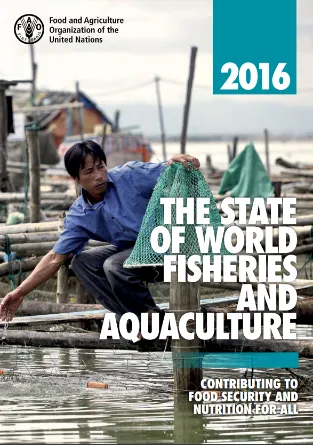
Image Resource Global fish consumption per capita hits record high according to new FAO report This is the 2016 edition of the FAO’s State of World Fisheries and Aquaculture. The report estimates that fish now provide 6.7% of all protein consumed by humans globally, passing the 20kg per capita and year mark for the first time. Read
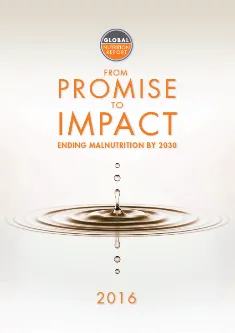
Image Resource The 2016 Global Nutrition Report The Global Nutrition Report is a multipartner initiative that holds a mirror up to our successes and failures at meeting intergovernmental nutrition targets. It is an independent and comprehensive annual review of the state of the world’s nutrition that documents progress on commitments made on the global stage, and it recommends actions to accelerate that progress. Read
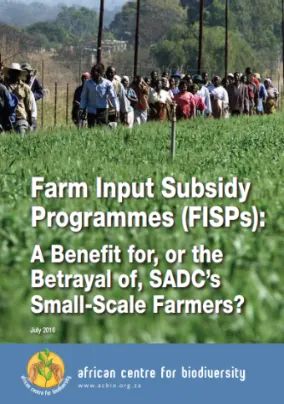
Image Resource Farm Input Subsidy Programmes (FISPs): Benefiting or Betraying SADC's Small-Scale Farmers – evidence from 10 African countries This report by the African Centre for Biodiversity argues that the Farm Input Subsidy Programmes (FISPs) have not achieved their intended goals in a number of African countries where they have been implemented. In its highly critical analysis the report argues that they consume large parts of agricultural and even national budgets and are largely ineffective social transfer schemes that create dependency. Read
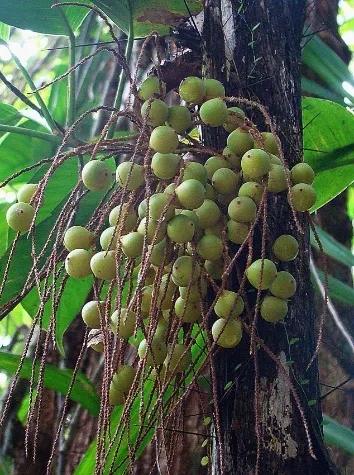
Image Resource Can a rugged Latin American palm become a major sustainable biofuel source? The neotropical macaw palm (Acrocomia aculeata) is increasingly promoted for large-scale cultivation as a sustainable biomass feedstock in Latin America. This paper warns however that a crucial proportion of areas predicted to be suitable for cultivation are located in areas of high conservational value. The paper also points to climate change scenarios which predict a substantial reduction of suitable areas in coming years. Read
Image Resource Mapping interactions between Sustainable Development Goals This paper aims to present a simple way of rating relationships between the Sustainable Development Goals (SDG) targets to highlight priorities for integrated policy. It presents a conceptual framework to analyse SDG interactions, organize evidence and support decision-making about national priorities. Read
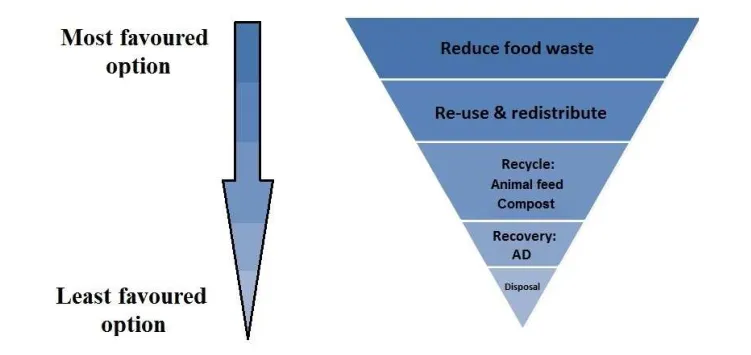
Image Resource Environmental and health impacts of using food waste as animal feed: a comparative analysis of food waste management options This paper analyses the options for and impacts of using food waste as animal feed and is the first study to compare the environmental impacts of recycling municipal food waste as animal feed with alternative disposal options in the EU. Read
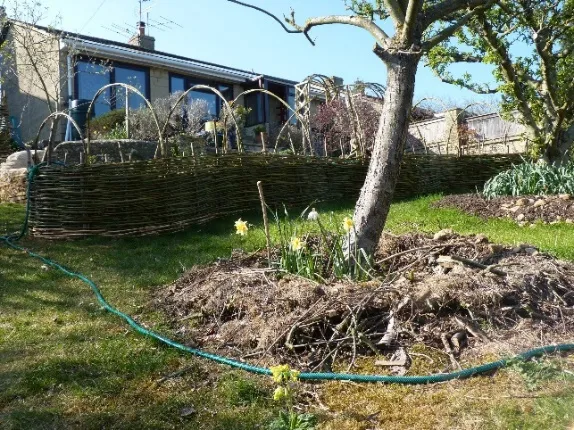
Image Resource Permaculture movement found lacking in diversity Permaculture is described here as a grassroots movement whose participants attempt to live in a sustainable way, taking inspiration from natural ecosystems in trying to live off the land as much as possible. The idea behind permaculture is to rely as much as possible on perennial crops, to recycle and reuse materials, and reduce waste. Read
Image Resource Are the claimed benefits of organic agriculture justified? In the paper Organic agriculture in the twenty-first century by Reganold and Wachter (2016), that the FCRN has previously summarised, organic agriculture was found to be more profitable and environmentally beneficial compared with conventional farming as well as more productive and profitable in the long term, especially in developing countries where it provides an “ideal blueprint in addressing climate change”. Read
Image Resource Protein futures for Western Europe: potential land use and climate impacts in 2050 This paper looks at the agricultural land requirements and GHG emissions associated with supplying Western Europe with food in 2050 from its own land base. It modelled a range of food consumption scenarios based on different ‘protein futures’ to evaluate land use and GHG emissions taking into account both production and demand side mitigation options. Read