Image Resources Our extensive research library contains thousands of summaries of journal articles, reports and news stories that can be searched by keyword and category RESOURCES CATEGORY Books Briefing paper Event recording Featured articles Featured report Game Journal articles News and resources Reports Think piece Video Working paper Workshop summary Year 2026 2025 2024 2023 2022 2021 2020 2019 2018 2017 2016 2015 2014 2013 2012 2011 2010 2009 2008 2007 2002 2001 Image Reports Strengthening capacity for advocacy in food systems of the poor This report from the UK’s International Institute for Environment and Development and Dutch development aid organisation Hivos discusses how citizens’ agency (i.e. ability to act freely and make independent choices) can be supported within food systems in the context of a development sector that is often strongly driven by stakeholders from the Global North. Read Image Reports Emissions due to agriculture: FAOSTAT 2020 update The Food and Agriculture Organisation of the United Nations has released the 2020 update of its dataset on agricultural emissions (accessible at FAOSTAT), with the newest figures covering the year 2018. Total agricultural emissions in 2018 were 9.3 billion tonnes of CO2 equivalent, of which 4 billion tonnes were from land use and land use change, and 3 billion tonnes of which were from livestock processes such as enteric fermentation and manure deposition. Agricultural and related land use emissions accounted for 17% of global emissions from all sectors. Read Image Reports Agroecological farming can feed the UK population This report from the UK’s Food, Farming & Countryside Commission finds that agroecological farming could produce enough healthy food to feed the expected UK population in 2050 while freeing up 7.5% of current agricultural area for uses such as woodland creation and public access. The model assumes that diets would include less meat, dairy and sugar, and more fruit, vegetables and nuts. Read Image Journal articles Scenarios for halting European Union soybean feed imports This paper examines three scenarios for animal-source food production in the European Union under two constraints: halting all imports of soybeans and soybean meal used as animal feed, and not using any additional land for animal feed cultivation (either inside or outside the EU). Read Image Journal articles The global environmental paw print of dry pet food This paper provides an overview of the environmental impacts of pet food production at the global level. It finds that, depending on the data source used, dry pet food production accounts for 1.1-2.9% of global agricultural emissions, 0.8-1.2% of global agricultural land use, and 0.2-0.4% of agricultural water extraction. Read Image Journal articles Climate impacts of home cooking methods in the UK Table members Ximena Schmidt Rivera, Sarah Bridle and Christian Reynolds have co-authored this paper, which finds that the cooking method used to prepare foods at home in the UK can account for up to 61% of total emission for some food types, and that emissions from cooking can be easily reduced. The paper is based on a survey of how UK consumers actually cook various foodstuffs, as opposed to recipe recommendations. Read Image Featured articles Climate costs of food greatest for animal products This paper calculates externalities - specifically, costs of climate change from greenhouse gas emissions - of categories of food produced in Germany. It finds that animal-based products (both conventional and organic) have the highest external climate costs (€2.41/kg product), followed by dairy products (€0.24/kg product for conventional and €0.19/kg product for organic), and finally plant-based products (€0.04/kg product for conventional and €0.02/kg product for organic). Read Image News and resources Recording: A recipe for a net zero food system On 16 November 2020, the LSHTM Centre on Climate Change & Planetary Health and food-sharing app OLIO hosted a discussion on the priority areas where change can contribute to a net zero future of food, such as tackling waste in the current food system and switching to healthy sustainable diets. A video recording of the event is now available. Read Image News and resources Blog post: Working with nature through agricultural biodiversity In this blog post from Agroecology Now! Patrick Mulvany of the Centre for Agroecology, Water and Resilience (CAWR) at Coventry University argues that agricultural biodiversity needs go beyond just seed diversity. Rather, he argues, there should be intentional diversity in many dimensions of agroecology, such as management practices, livestock breeds, forest species, support species, agroecosystems, soil organisms, pollinators, and so on. Read VIEW MORE
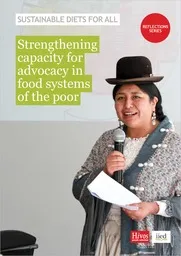
Image Reports Strengthening capacity for advocacy in food systems of the poor This report from the UK’s International Institute for Environment and Development and Dutch development aid organisation Hivos discusses how citizens’ agency (i.e. ability to act freely and make independent choices) can be supported within food systems in the context of a development sector that is often strongly driven by stakeholders from the Global North. Read
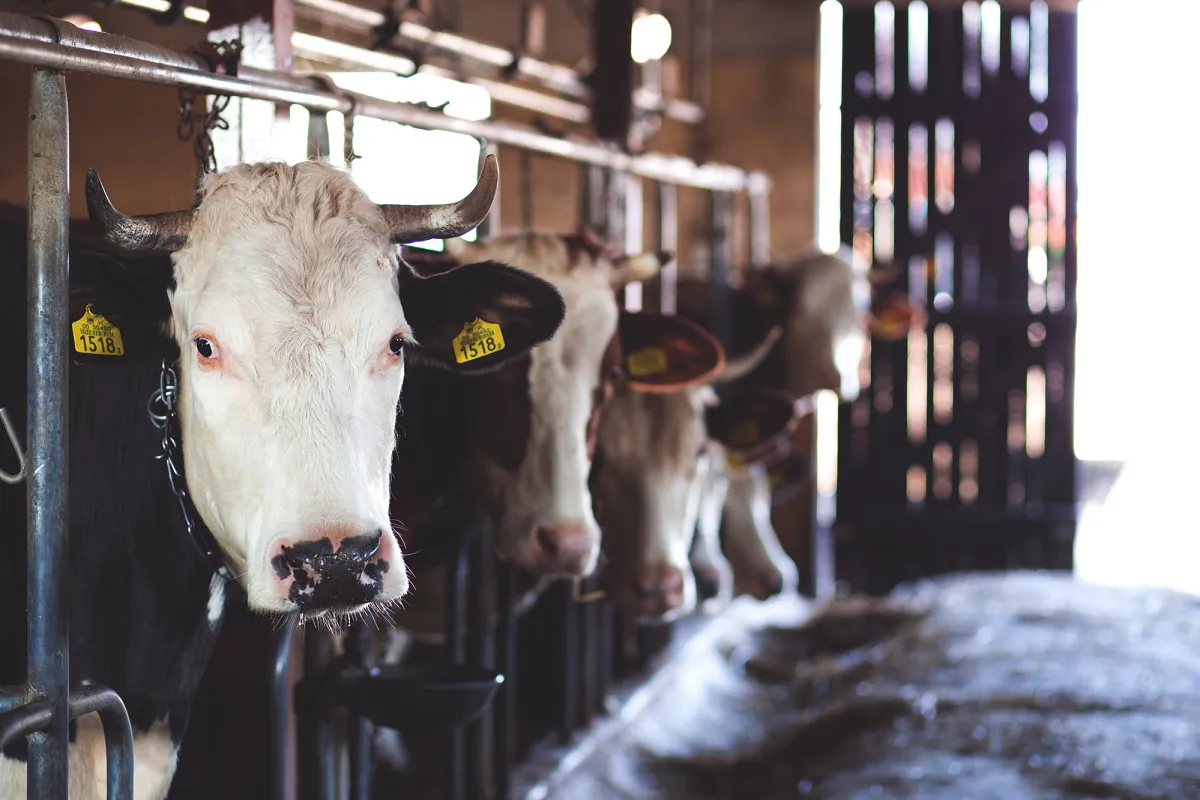
Image Reports Emissions due to agriculture: FAOSTAT 2020 update The Food and Agriculture Organisation of the United Nations has released the 2020 update of its dataset on agricultural emissions (accessible at FAOSTAT), with the newest figures covering the year 2018. Total agricultural emissions in 2018 were 9.3 billion tonnes of CO2 equivalent, of which 4 billion tonnes were from land use and land use change, and 3 billion tonnes of which were from livestock processes such as enteric fermentation and manure deposition. Agricultural and related land use emissions accounted for 17% of global emissions from all sectors. Read
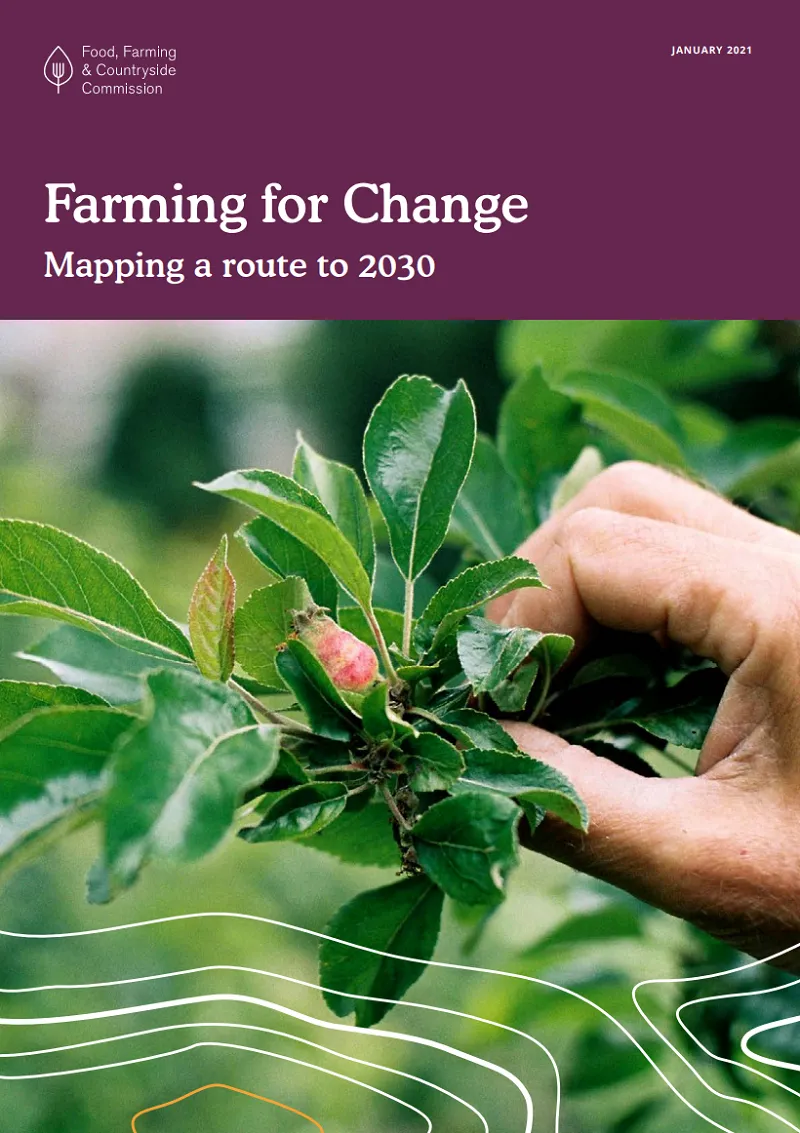
Image Reports Agroecological farming can feed the UK population This report from the UK’s Food, Farming & Countryside Commission finds that agroecological farming could produce enough healthy food to feed the expected UK population in 2050 while freeing up 7.5% of current agricultural area for uses such as woodland creation and public access. The model assumes that diets would include less meat, dairy and sugar, and more fruit, vegetables and nuts. Read
Image Journal articles Scenarios for halting European Union soybean feed imports This paper examines three scenarios for animal-source food production in the European Union under two constraints: halting all imports of soybeans and soybean meal used as animal feed, and not using any additional land for animal feed cultivation (either inside or outside the EU). Read
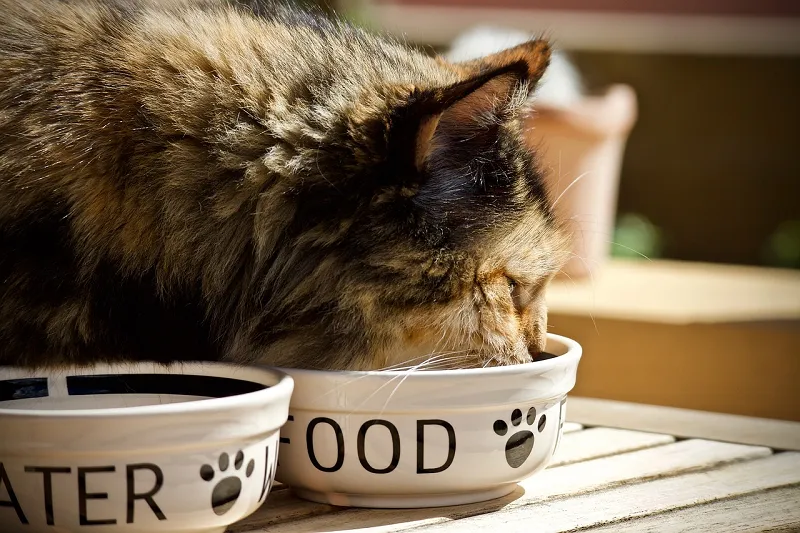
Image Journal articles The global environmental paw print of dry pet food This paper provides an overview of the environmental impacts of pet food production at the global level. It finds that, depending on the data source used, dry pet food production accounts for 1.1-2.9% of global agricultural emissions, 0.8-1.2% of global agricultural land use, and 0.2-0.4% of agricultural water extraction. Read
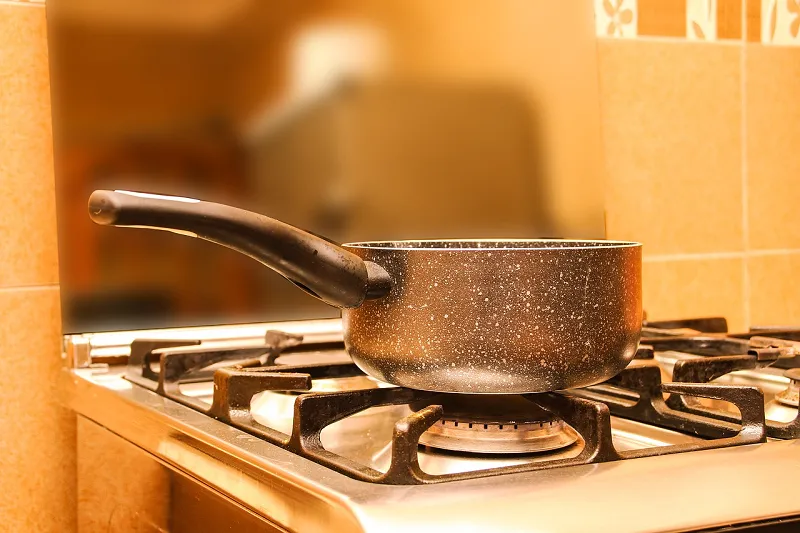
Image Journal articles Climate impacts of home cooking methods in the UK Table members Ximena Schmidt Rivera, Sarah Bridle and Christian Reynolds have co-authored this paper, which finds that the cooking method used to prepare foods at home in the UK can account for up to 61% of total emission for some food types, and that emissions from cooking can be easily reduced. The paper is based on a survey of how UK consumers actually cook various foodstuffs, as opposed to recipe recommendations. Read
Image Featured articles Climate costs of food greatest for animal products This paper calculates externalities - specifically, costs of climate change from greenhouse gas emissions - of categories of food produced in Germany. It finds that animal-based products (both conventional and organic) have the highest external climate costs (€2.41/kg product), followed by dairy products (€0.24/kg product for conventional and €0.19/kg product for organic), and finally plant-based products (€0.04/kg product for conventional and €0.02/kg product for organic). Read
Image News and resources Recording: A recipe for a net zero food system On 16 November 2020, the LSHTM Centre on Climate Change & Planetary Health and food-sharing app OLIO hosted a discussion on the priority areas where change can contribute to a net zero future of food, such as tackling waste in the current food system and switching to healthy sustainable diets. A video recording of the event is now available. Read
Image News and resources Blog post: Working with nature through agricultural biodiversity In this blog post from Agroecology Now! Patrick Mulvany of the Centre for Agroecology, Water and Resilience (CAWR) at Coventry University argues that agricultural biodiversity needs go beyond just seed diversity. Rather, he argues, there should be intentional diversity in many dimensions of agroecology, such as management practices, livestock breeds, forest species, support species, agroecosystems, soil organisms, pollinators, and so on. Read