Image Resources Our extensive research library contains thousands of summaries of journal articles, reports and news stories that can be searched by keyword and category RESOURCES CATEGORY Books Briefing paper Event recording Featured articles Featured report Game Journal articles News and resources Reports Think piece Video Working paper Workshop summary Year 2026 2025 2024 2023 2022 2021 2020 2019 2018 2017 2016 2015 2014 2013 2012 2011 2010 2009 2008 2007 2002 2001 Image Resource Climate analogues suggest limited potential for intensification of production on current croplands under climate change This paper takes as its starting point the mainstream projections that in future, global food production will need to increase by another 60–110% by 2050, to keep up with anticipated increases in human population and changes in diet (it should be noted, however, that the need and feasibility of such increases is contested (see), with many arguing that dietary change and waste reduction can reduce the need for production increases (see)). Read Image Resource Alignment of Healthy Dietary Patterns and Environmental Sustainability: A Systematic Review This systematic review confirms earlier findings that a number of well-categorised sustainable dietary patterns are also good for health outcomes. There was consistent evidence to suggest that diets higher in plant-based foods such as vegetables, fruits, legumes, seeds, nuts, and whole grains and lower in animal-based foods (especially red meat), are both healthier and associated with a lower impact on the environment. Read Image Resource Using the concept of ‘nutritional yield’ as a metric to evaluate synergies and tradeoffs for sustainable agriculture Over the past half-century, the paradigm for agricultural development has been to maximize yields through intensifying production, especially for cereal crops. But achieving food security and building a healthy, resilient global food supply is about more than just the quantity of calories provided. New metrics of success and methods of evaluation are needed in order to measure progress towards meeting the world’s nutritional needs within environmental limits. Read Image Resource Systematic review on the impacts of dietary change on greenhouse gas emissions, land use, water use, and health This paper by FCRN member Lukasz Aleksandrowicz and colleagues consolidates current evidence on the environmental impacts of dietary change, finding environmental benefits are possible from shifting typical Western diets to a variety of alternative dietary patterns. The results also highlight that there is still complexity in defining environmentally sustainable diets, though moderate reductions in meat consumption (particularly ruminant meat) replaced by plant-based foods, seem to reliably reduce greenhouse gas (GHG) emissions, land use, and water use, as well as improve health. Read Image Resource Reducing meat consumption in developed and transition countries to counter climate change and biodiversity loss: a review of influence factors FCRN members Prof. Dr. Susanne Stoll-Kleemann and Uta Schmidt (MSc.) have brought our attention to their recent article on reducing meat consumption. Read Image Resource PODCAST: Liz Goodwin on Reducing Food Loss and Waste — Lessons from the UK On this episode of the World Resources Institute (WRI) podcast, Lawrence MacDonald interviews Dr Liz Goodwin, who is a WRI senior fellow and their first Director of food loss and waste. Read Image Resource How Mars and WRI Developed Science-based Sustainability Targets for climate, land and water This blog on the World Resources Institute’s (WRI) website discusses their collaboration with food multinational Mars in developing science-based sustainability targets for climate, land use, and water. Read Image Resource New campaign, launch 10th November: Are you #vegcurious? The Eating Better Alliance has launched a new campaign about eating less meat. The alliance have worked to create a new way of talking about eating less meat, through fun and positive messages and a set of adverts to inspire a new generation of men to be more daring with their food and give vegetarian options a chance. Read Image Resource Lecture by Tim Lang on Brexit and the food system On 24th of October 2016, Professor Tim Lang gave a ‘Food Thinkers’ lecture on the potential consequences of Brexit on the food system. It discussed: Read VIEW MORE
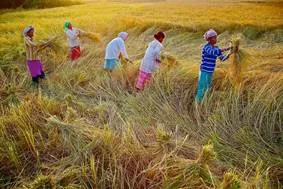
Image Resource Climate analogues suggest limited potential for intensification of production on current croplands under climate change This paper takes as its starting point the mainstream projections that in future, global food production will need to increase by another 60–110% by 2050, to keep up with anticipated increases in human population and changes in diet (it should be noted, however, that the need and feasibility of such increases is contested (see), with many arguing that dietary change and waste reduction can reduce the need for production increases (see)). Read
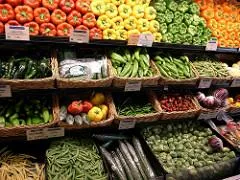
Image Resource Alignment of Healthy Dietary Patterns and Environmental Sustainability: A Systematic Review This systematic review confirms earlier findings that a number of well-categorised sustainable dietary patterns are also good for health outcomes. There was consistent evidence to suggest that diets higher in plant-based foods such as vegetables, fruits, legumes, seeds, nuts, and whole grains and lower in animal-based foods (especially red meat), are both healthier and associated with a lower impact on the environment. Read
Image Resource Using the concept of ‘nutritional yield’ as a metric to evaluate synergies and tradeoffs for sustainable agriculture Over the past half-century, the paradigm for agricultural development has been to maximize yields through intensifying production, especially for cereal crops. But achieving food security and building a healthy, resilient global food supply is about more than just the quantity of calories provided. New metrics of success and methods of evaluation are needed in order to measure progress towards meeting the world’s nutritional needs within environmental limits. Read
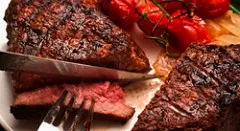
Image Resource Systematic review on the impacts of dietary change on greenhouse gas emissions, land use, water use, and health This paper by FCRN member Lukasz Aleksandrowicz and colleagues consolidates current evidence on the environmental impacts of dietary change, finding environmental benefits are possible from shifting typical Western diets to a variety of alternative dietary patterns. The results also highlight that there is still complexity in defining environmentally sustainable diets, though moderate reductions in meat consumption (particularly ruminant meat) replaced by plant-based foods, seem to reliably reduce greenhouse gas (GHG) emissions, land use, and water use, as well as improve health. Read
Image Resource Reducing meat consumption in developed and transition countries to counter climate change and biodiversity loss: a review of influence factors FCRN members Prof. Dr. Susanne Stoll-Kleemann and Uta Schmidt (MSc.) have brought our attention to their recent article on reducing meat consumption. Read
Image Resource PODCAST: Liz Goodwin on Reducing Food Loss and Waste — Lessons from the UK On this episode of the World Resources Institute (WRI) podcast, Lawrence MacDonald interviews Dr Liz Goodwin, who is a WRI senior fellow and their first Director of food loss and waste. Read
Image Resource How Mars and WRI Developed Science-based Sustainability Targets for climate, land and water This blog on the World Resources Institute’s (WRI) website discusses their collaboration with food multinational Mars in developing science-based sustainability targets for climate, land use, and water. Read
Image Resource New campaign, launch 10th November: Are you #vegcurious? The Eating Better Alliance has launched a new campaign about eating less meat. The alliance have worked to create a new way of talking about eating less meat, through fun and positive messages and a set of adverts to inspire a new generation of men to be more daring with their food and give vegetarian options a chance. Read
Image Resource Lecture by Tim Lang on Brexit and the food system On 24th of October 2016, Professor Tim Lang gave a ‘Food Thinkers’ lecture on the potential consequences of Brexit on the food system. It discussed: Read