Image Resources Our extensive research library contains thousands of summaries of journal articles, reports and news stories that can be searched by keyword and category RESOURCES CATEGORY Books Briefing paper Event recording Featured articles Featured report Game Journal articles News and resources Reports Think piece Video Working paper Workshop summary Year 2026 2025 2024 2023 2022 2021 2020 2019 2018 2017 2016 2015 2014 2013 2012 2011 2010 2009 2008 2007 2002 2001 Image Resource Total global agricultural land footprint associated with UK food supply 1986–2011 With global trade, UK consumption patterns are displacing cropland use to other countries. This paper by FCRN members Henri de Ruiter, Jennie Macdiarmid and Pete Smith looks at the environmental consequences of competition for global agricultural land and specifically at the total land footprint associated with the total livestock product supply in the UK. Read Image Resource Dietary guidance for pulses: the challenge and opportunity to be part of both the vegetable and protein food groups This paper provides an overview of dietary guidance for pulses, discussing their nutritional composition and health benefits as well as the evolution of the way in which the USDA’s dietary guidelines categorise pulses. The paper was published in a special issue on The Potential of Pulses to Meet Today’s Health Challenges: Staple Foods in the journal Annals of the New York Academy of Sciences. Read Image Resource Consumer perception and behaviour regarding sustainable protein consumption: A systematic review This is a systematic review on consumer perception and behaviours in relation to meat, meat substitutes and the environment. It finds that both awareness of the environmental impact of meat consumption and a willingness to reduce meat consumption is low in the studied populations. The authors identify as a key research area the investigation of strategies that might help to motivate more moderate, sustainable meat consumption behaviour. Read Image Resource New technique using pluripotent stem cells to aid development of cultured pig meat This article in Nature Scientific Reports details a new approach for generating skeletal muscle from pigs which can be used to make skeletal muscle – the main component of pork meat – in vitro. The techniques are potentially applicable to other types of muscle, such as heart muscle tissue, as well. Read Image Resource Five propositions to harmonize environmental footprints of food and beverages This article by T.C. Ponsioen of Wageningen University, and H.M.G. van der Werf of INRA, discusses the major sources of inconsistency in life cycle assessment (LCA) analyses of food and drink, and makes recommendations to address these inconsistencies. The article begins by describing the many attempts that have been made to standardise (or ‘harmonise’) environmental footprints of food and drink, and identifies five main areas which lack consensus. Read Image Resource Sticky labels on fresh food can be replaced by laser marking A new technology using a harmless laser beam can replace stickers on fresh food produce with a direct marking on the skin of a piece of fruit or vegetable. Named ‘Natural Branding’, the innovation could result in significant savings in sticker use as well as packaging. Nature and More, a Dutch organic food exporter, in collaboration with Swedish supermarket ICA is now using the branding on organic avocados and sweet potatoes. Read Image Resource The Right to Food Guidelines, Democracy and Citizen Participation: Country case studies This book by Katharine Cresswell Riol provides a review of the objectives of the Right to Food Guidelines that were implemented a decade ago. Read Image Resource Report on meat production and consumption: should the focus be on ruminants or monogastrics? This report by Compassion for World Farming discusses the potential effects of a reduction in meat consumption in relation to the difference between ruminants such as cows and monogastrics such as pigs and poultry. Read Image Resource Report by GRAIN about cutting meat and dairy consumption This report outlines the main - familiar - arguments for cutting meat and dairy consumption in high-income countries in order to significantly reduce GHG emissions. It specifically focuses on larger corporations and briefly touches on governance issues. Read VIEW MORE
Image Resource Total global agricultural land footprint associated with UK food supply 1986–2011 With global trade, UK consumption patterns are displacing cropland use to other countries. This paper by FCRN members Henri de Ruiter, Jennie Macdiarmid and Pete Smith looks at the environmental consequences of competition for global agricultural land and specifically at the total land footprint associated with the total livestock product supply in the UK. Read
Image Resource Dietary guidance for pulses: the challenge and opportunity to be part of both the vegetable and protein food groups This paper provides an overview of dietary guidance for pulses, discussing their nutritional composition and health benefits as well as the evolution of the way in which the USDA’s dietary guidelines categorise pulses. The paper was published in a special issue on The Potential of Pulses to Meet Today’s Health Challenges: Staple Foods in the journal Annals of the New York Academy of Sciences. Read
Image Resource Consumer perception and behaviour regarding sustainable protein consumption: A systematic review This is a systematic review on consumer perception and behaviours in relation to meat, meat substitutes and the environment. It finds that both awareness of the environmental impact of meat consumption and a willingness to reduce meat consumption is low in the studied populations. The authors identify as a key research area the investigation of strategies that might help to motivate more moderate, sustainable meat consumption behaviour. Read
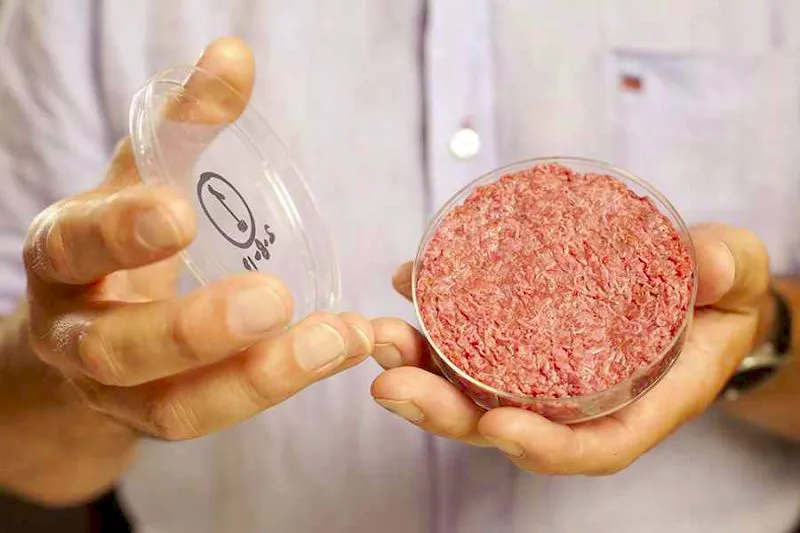
Image Resource New technique using pluripotent stem cells to aid development of cultured pig meat This article in Nature Scientific Reports details a new approach for generating skeletal muscle from pigs which can be used to make skeletal muscle – the main component of pork meat – in vitro. The techniques are potentially applicable to other types of muscle, such as heart muscle tissue, as well. Read
Image Resource Five propositions to harmonize environmental footprints of food and beverages This article by T.C. Ponsioen of Wageningen University, and H.M.G. van der Werf of INRA, discusses the major sources of inconsistency in life cycle assessment (LCA) analyses of food and drink, and makes recommendations to address these inconsistencies. The article begins by describing the many attempts that have been made to standardise (or ‘harmonise’) environmental footprints of food and drink, and identifies five main areas which lack consensus. Read
Image Resource Sticky labels on fresh food can be replaced by laser marking A new technology using a harmless laser beam can replace stickers on fresh food produce with a direct marking on the skin of a piece of fruit or vegetable. Named ‘Natural Branding’, the innovation could result in significant savings in sticker use as well as packaging. Nature and More, a Dutch organic food exporter, in collaboration with Swedish supermarket ICA is now using the branding on organic avocados and sweet potatoes. Read
Image Resource The Right to Food Guidelines, Democracy and Citizen Participation: Country case studies This book by Katharine Cresswell Riol provides a review of the objectives of the Right to Food Guidelines that were implemented a decade ago. Read
Image Resource Report on meat production and consumption: should the focus be on ruminants or monogastrics? This report by Compassion for World Farming discusses the potential effects of a reduction in meat consumption in relation to the difference between ruminants such as cows and monogastrics such as pigs and poultry. Read
Image Resource Report by GRAIN about cutting meat and dairy consumption This report outlines the main - familiar - arguments for cutting meat and dairy consumption in high-income countries in order to significantly reduce GHG emissions. It specifically focuses on larger corporations and briefly touches on governance issues. Read